Claude Code Pricing (2026): Which Plan You Need, What It Really Costs and How to Control It

Most founders look at Claude Code pricing, see two different models (a flat monthly plan and a per-token bill) and freeze. Pick a Claude Code subscription and you worry about hitting a limit mid-job. Pick the API and you worry about an invoice you did not see coming.
This guide shows you how Claude Code pricing works and how to keep it predictable. You get the plans that include Claude Code as of September 2026, the honest answer on free options and trials, how usage is counted, a 5-step system to estimate and cap your spend, a published Anthropic customer story and the two Claude prompts we use to make the decision.
The short version:
- Claude Code is included in every paid Claude plan (Pro, Max, Team and Enterprise), and it is not included in the free plan, as of September 2026.
- There are two ways to pay: a subscription with usage limits, or pay-as-you-go API billing through a Claude Console account.
- On a subscription, Claude Code and your normal Claude chats draw from one shared usage pool.
- Anthropic's own docs put the enterprise average at around $13 per developer per active day, but your number depends on model choice, context size and automation.
- The cheapest lever is not the plan. It is smaller context, the right model for each job and a hard spend cap.
What is Claude Code pricing?
Claude Code pricing is the way Anthropic charges for using Claude Code, its agentic tool that reads files, edits them and runs commands on your computer. You either pay a flat monthly subscription that includes Claude Code with usage limits, or you connect a Claude Console account and pay per token at API rates. Anthropic's pricing page states it plainly in its FAQ: Claude Code is included in all paid plans and shares the same limits as the rest of your plan.
New to the tool? Start with how to use Claude Code and the Claude Code install guide.
The core: subscription versus pay-as-you-go
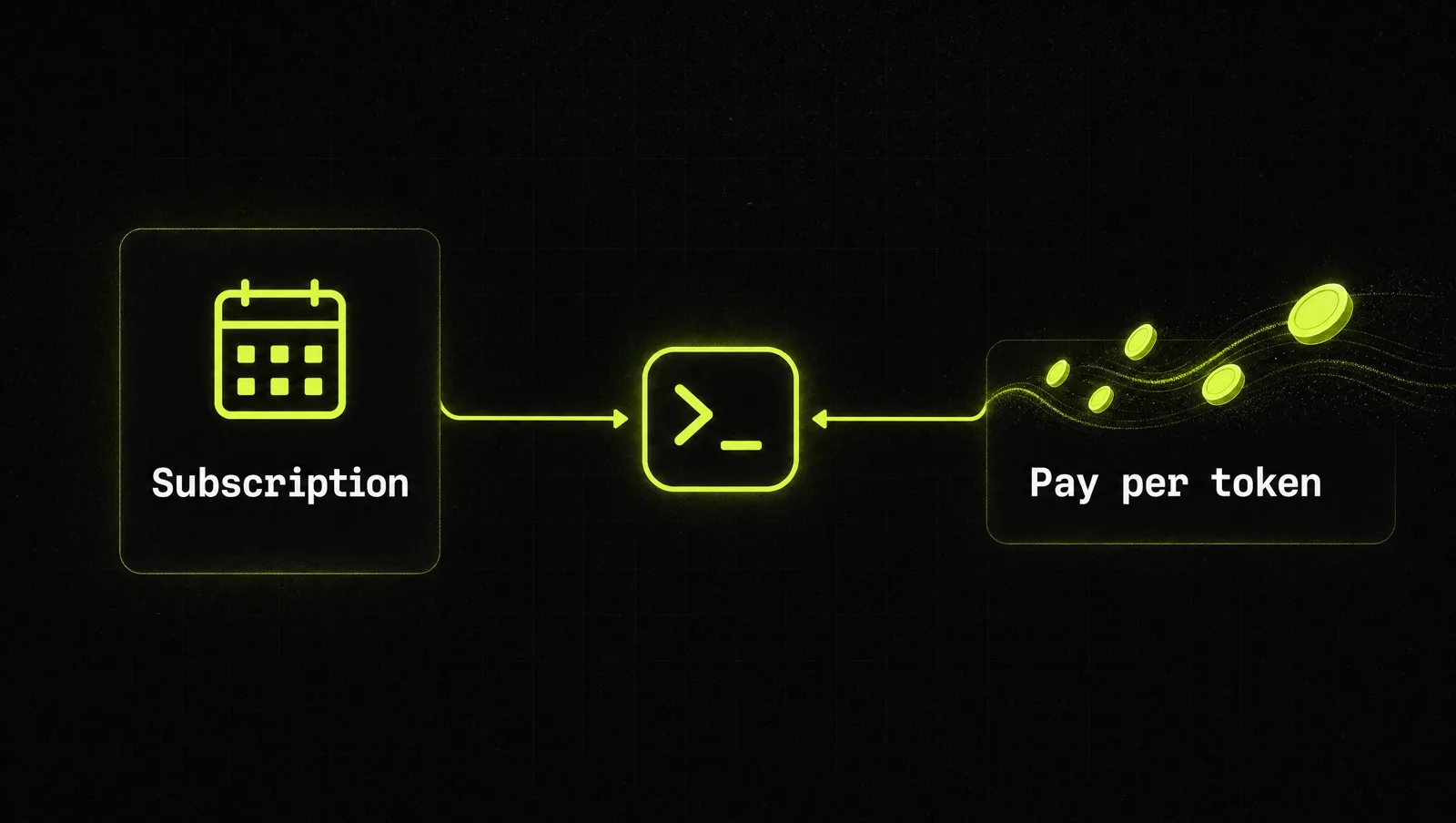
Here is what the official pages list as of September 2026. Prices come from claude.com/pricing, the Max tiers from Anthropic's Max plan help article and the API rates from the Claude API pricing docs.
| Option | Price (as of September 2026) | Claude Code included? | How usage works |
|---|---|---|---|
| Free | $0 | No | Not available for Claude Code |
| Pro | $20 per month, or $17 per month billed yearly ($200 upfront) | Yes | Usage limits shared with Claude chat |
| Max 5x | $100 per month | Yes | 5x the Pro allowance |
| Max 20x | $200 per month | Yes | 20x the Pro allowance |
| Team, Standard seat | $25 per month monthly, $20 per month yearly | Yes | Per-seat allowance |
| Team, Premium seat | $125 per month monthly, $100 per month yearly | Yes | Larger per-seat allowance |
| Enterprise | $20 per seat per month (yearly) plus usage at API rates | Yes | Seat plus metered usage |
| Claude Console (API) | Per million tokens, for example Sonnet 5.5 at $2 input and $10 output, Opus 5.5 at $4 input and $20 output | Yes | Billed per token, no plan limit |
Prices change often, so always check the official pricing page before you buy. For the full plan comparison outside of Claude Code, see our Claude pricing guide, and for per-token details our Claude API pricing breakdown.
How usage counts on a subscription. Anthropic's help center says that on Pro and Max, all activity in Claude Code and on claude.ai counts against the same usage limits. The Max help article explains that a session-based limit resets every five hours and a weekly cap resets at a fixed time each week. On Team and Enterprise, the Claude Code cost docs describe the same shape: a per-seat allowance on a rolling five-hour window and a weekly window, shared with Claude chat and Cowork. Our guide to Claude usage limits goes deeper.
What happens at the limit. On Pro and Max you can turn on usage credits, which are billed at standard API rates, charged separately from your subscription and can be capped with a monthly spending limit. Or you simply wait for the reset.
The API trap. If an ANTHROPIC_API_KEY environment variable is set on your computer, Anthropic warns that Claude Code uses that key instead of your subscription, resulting in API usage charges. Many surprise bills start right there.
How to estimate and control Claude Code cost in 5 steps
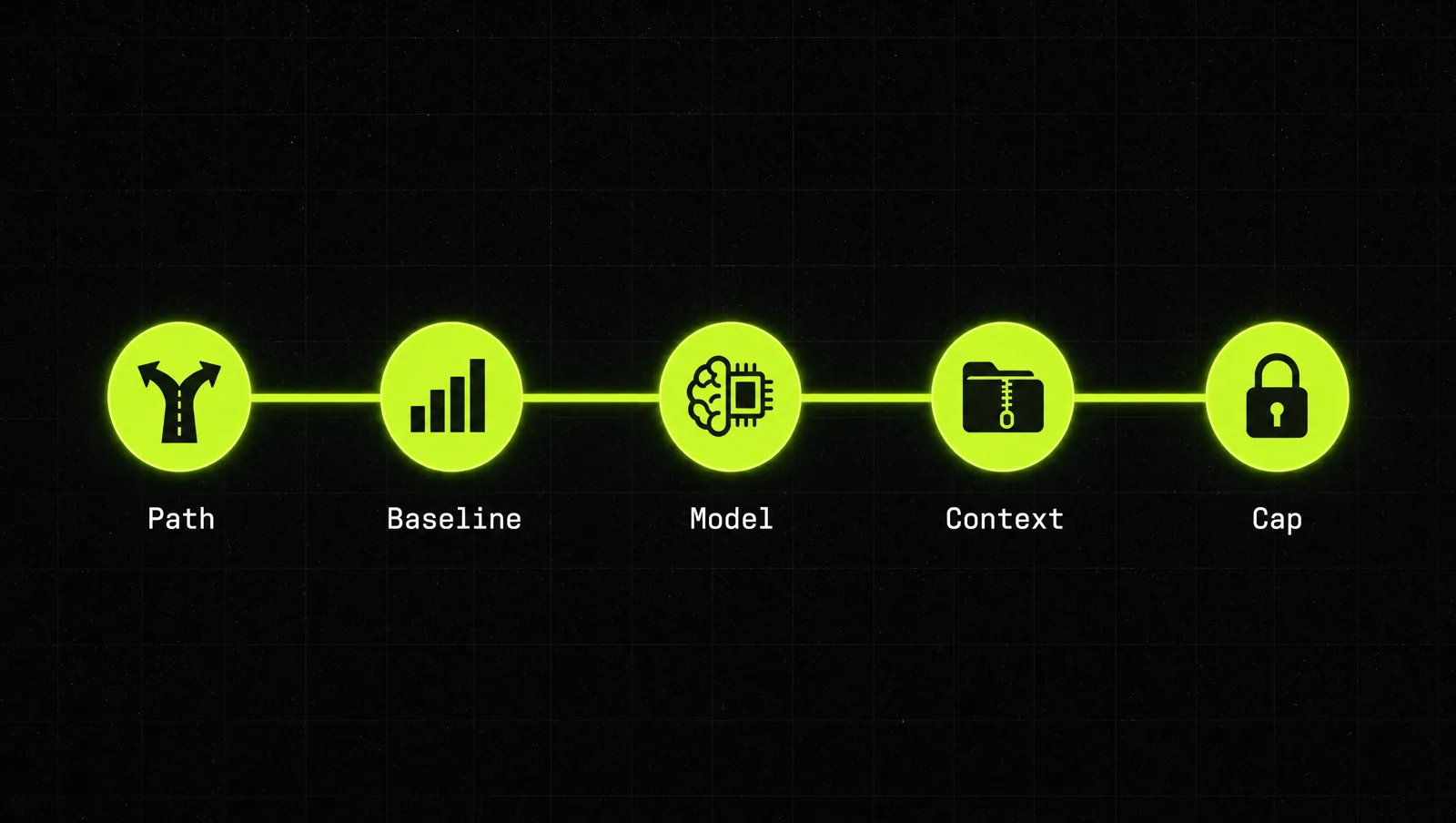
Step 1: Choose your billing path on purpose
Ask one question: do you want a predictable bill or unlimited throughput? Interactive work by a founder or small team usually fits a subscription: the price is fixed and the worst case is a pause until the limit resets. Automation and heavy parallel work fit the Console, where you pay per token and set your own caps. Then log in with the account you chose, and remove any stray API key from your environment if you want the subscription to pay.
Step 2: Build a baseline before you commit
Do not guess. Anthropic's cost docs give a reference point: across enterprise deployments, the average is around $13 per developer per active day and $150 to $250 per developer per month, with 90% of users below $30 per active day. The docs recommend a small pilot first. Run /usage for a week: API users see a session cost estimate, subscribers see plan usage bars and a breakdown of what consumed their limit, such as subagents, MCP servers or long context.
Step 3: Match the model to the job
Model choice moves cost more than anything else. The docs advise using Sonnet for most coding tasks because it costs less than Opus, and reserving Opus for complex architecture or multi-step reasoning. As of September 2026, the current lineup is Claude Fable 5.1, Claude Opus 5.5, Claude Sonnet 5.5 and Claude Haiku 4.5. Switch with /model, lower the reasoning effort with /effort for simple tasks, and give simple subagents the Haiku model.
Step 4: Keep the context small
Every request carries your whole conversation, so a long session costs more with each message. The habits from Anthropic's cost docs:
- Use
/clearwhen you switch to unrelated work. - Keep CLAUDE.md under about 200 lines and move specialized instructions into skills, which load only when needed.
- Disable MCP servers you are not using.
- Write specific prompts. "Improve this project" triggers broad scanning. "Fix the date format in invoices.csv" does not.
- Use plan mode for bigger tasks, so Claude proposes an approach before building the wrong thing.
Step 5: Put a hard cap on it
Limits turn a cost into a budget. On Pro and Max, set a monthly spend limit for usage credits in Settings, Usage. On Team and Enterprise, admins set spend limits per organization, group or member. On the Console, set workspace spend limits on the automatically created Claude Code workspace. Review monthly and change plans only when the data says so. If you are torn between the two personal tiers, read Claude Pro vs Max.
Is Claude Code free? Free options and trials
No. Anthropic's setup docs say Claude Code requires a Pro, Max, Team, Enterprise or Console account, and the free claude.ai plan does not include Claude Code access. We found no free trial for Claude Code on the official pricing page as of September 2026.
The closest thing to a free start is the API route: Anthropic's pricing FAQ says new users receive a small amount of free credits to test the API, and enterprises can contact sales about extended trials for evaluation. A Console account works with Claude Code, so those credits let you try it on a real task before you pick a plan. The lowest-cost ongoing option is Pro.
A real case: how Rakuten cut feature time to market with Claude Code

The price of a plan only matters next to what it buys. Anthropic's published Rakuten customer story is one of the clearest examples of that math:
- Rakuten, which runs more than 70 businesses, reduced its average time to market for new features from 24 working days to 5 days, a 79% reduction, using Claude Code.
- In one test, Claude Code worked autonomously for seven hours on an open-source refactoring task in vLLM, a library of 12.5 million lines of code, with minimal human guidance.
- The story reports 99.9% accuracy on those complex code modifications.
Look at it through the system:
- Baseline first: the win is stated against a measured before number (24 working days), not a feeling.
- Right tool for the job: long, autonomous tasks are exactly where a higher tier or API budget pays for itself, and small edits are not.
- Output over input: nobody in that story talks about tokens. They talk about days saved.
The lesson: judge Claude Code by cost per result, not cost per month. An expensive plan is cheap if it removes weeks of work.
Three use cases
These examples are illustrative, not real clients. They show how the same system leads to different choices.
Use case 1: Solo founder cleaning up operations
Before: copies CSV files into a chat window by hand every week.
After: starts on Pro, runs /usage for two weeks and finds that only the Monday reporting run hits the limit. Keeps Pro and sets a small monthly cap on usage credits for the rare overflow.
Use case 2: Agency with five people
Before: personal accounts, one API key left on a laptop, a surprise invoice at month end.
After: Team plan with Premium seats for the two heavy users, Standard seats for the rest, the stray key removed and an organization spend limit.
Use case 3: SaaS running Claude Code in automation
Before: a nightly script on a personal Max plan that stalls at the weekly cap.
After: the automation moves to a Console workspace with a spend limit, subagents run on Haiku, and the team reviews usage every Friday.
How we run this with Claude
Inside CopyPasteCEO we make this decision with two prompts in one chat, so Claude keeps the context. Copy them and fill in the brackets.
Prompt 1: pick the right plan from your real usage
Make it yours · 0/6 filled
You are a cost analyst for AI tools. Here is how I plan to use Claude Code: [TASKS], about [HOURS PER WEEK] hours per week, [NUMBER] people, with or without automation: [YES OR NO]. Here is my /usage output from the last 7 days: [PASTE USAGE]. Here are the official plans and prices I copied from claude.com/pricing today: [PASTE PLANS]. Recommend one billing path (subscription tier or Console API), explain why in five bullets, and name the single signal that should make me switch later. Use only the prices I pasted.Prompt 2: cut token usage without losing quality
Make it yours · 0/3 filled
Here is my CLAUDE.md: [PASTE FILE]. Here are my active MCP servers: [LIST]. Here are my three most common Claude Code tasks: [TASKS]. Suggest what to move from CLAUDE.md into skills, which MCP servers to disable, which tasks can run on a smaller model or lower effort, and rewrite my three task prompts to be specific enough to avoid broad file scanning.These prompts give you a first plan decision and a leaner setup. Deciding when to upgrade or cut back is where most people get stuck, because the right answer changes as your work changes.
Where most people get stuck
Reading the price list takes five minutes. Running Claude Code at a cost you control is harder:
- They pay twice without knowing it. An old API key sits in the environment and bills per token while the subscription goes unused.
- They upgrade instead of cleaning up. A bloated context and Opus on every task burn through limits, and a bigger plan only hides the problem.
- They never set a cap. Usage credits and API billing run without a spend limit until the invoice arrives.
That is the gap the Inner Circle is built for: the playbooks to set up and run Claude Code like a system, a new playbook every week, and founders building next to you.